Chicago's Artists Are Drawing a Line in the Sand: The Fight for Human Creativity in the Age of AI
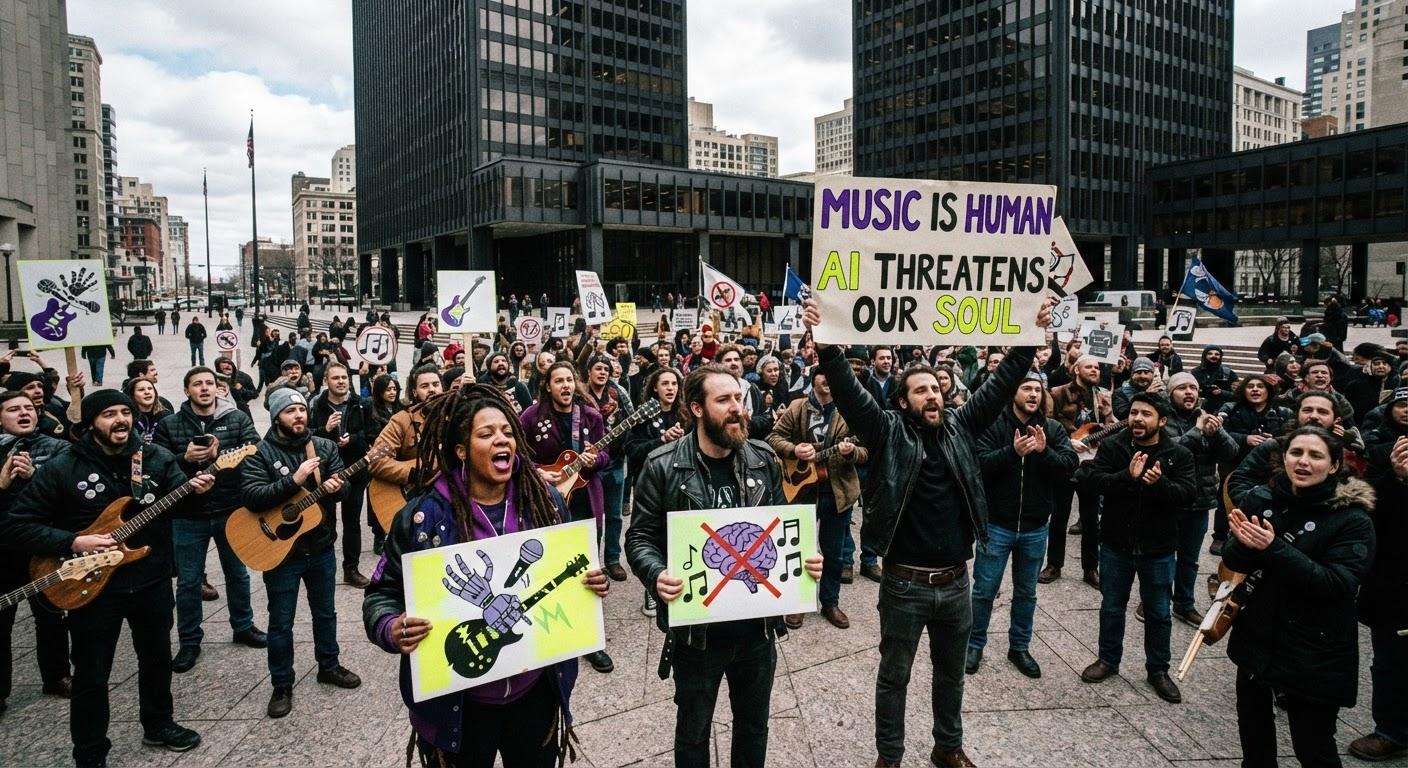
On October 25, 2026, visual artists, musicians, performers, and creative professionals gathered outside the Dirksen Federal Courthouse in Chicago to protest the use of generative AI systems that have been trained on copyrighted creative work without consent or compensation.
The demonstration took place as court proceedings continued in a series of ongoing lawsuits against major technology companies, including OpenAI, Microsoft, Meta, and Stability AI, alleging that these companies scraped vast amounts of copyrighted material without permission to train their AI models.
The rally, organized by grassroots artist advocacy groups and supported by established organizations like the Recording Academy and the Graphic Artists Guild, highlighted a tension that continues to divide the creative community: whether generative AI represents a useful tool or an existential threat to professional creative work.
The Lawsuit and What It Represents
The legal challenges being heard in Chicago are among several major lawsuits filed against AI companies for copyright infringement.
Artists claim that their original work—images, music compositions, written content, illustrations, and performances—was collected without permission and used to train AI systems that now compete with human creators in commercial markets.
In many cases, creators discovered their work was part of AI training datasets only after systems began generating content that visibly mimicked their recognizable styles.
From a legal perspective, the central question is whether the use of copyrighted material to train AI models falls under "fair use" or constitutes infringement that requires licensing agreements and compensation.
From a practical and ethical perspective, the issue extends beyond copyright law. It concerns the sustainability of creative professions, the value assigned to artistic skill, and whether technological advancement should prioritize efficiency at the expense of the people whose work made that advancement possible.
Why Artists Are Concerned
For working creatives, the concern is not necessarily about the technology itself. Many professional artists already use digital tools, automation, and software-assisted workflows in their daily practice.
The protest was less about opposing technological innovation and more about opposing the way this particular innovation has been developed—without transparency, without consent, and without acknowledging or compensating the people whose work made it possible.
The central concerns raised by artists include:
**1. Loss of income and opportunity** Clients who might have previously hired illustrators, photographers, composers, or designers now have access to tools that can generate acceptable alternatives in seconds for a fraction of the cost.
**2. Devaluation of creative work** When AI systems can generate thousands of variations on demand, the perceived value of individually created work decreases, making it harder for professional creators to justify their rates or maintain their standards of living.
**3. Style appropriation without attribution** Some artists have discovered that AI systems can replicate their personal visual styles—styles that took years to develop—reducing their uniqueness and market differentiation.
**4. No control over usage** Creators did not consent to their work being part of training datasets and have no ability to opt out or remove their contributions from AI models after the fact.
**5. Lack of transparency** Many creators had no knowledge their work had been used until AI-generated content began appearing online that closely resembled their own.
The Industry Response
Tech companies argue that training AI systems using publicly available data falls under fair use and is comparable to how human artists learn by studying the work of others.
However, artists counter that there is a significant difference between inspiration and replication, and between human creative development and industrial-scale data harvesting.
The argument from the tech industry is largely that AI tools democratize creativity, allowing people without traditional artistic training to produce professional-quality content.
The counterargument from creatives is that democratization should not mean the displacement of people who dedicate their careers to developing those skills.
While some artists are exploring ways to integrate generative AI into their creative workflows, many others are advocating for stronger protections and clearer boundaries around how AI systems are trained and deployed in creative industries.
Building a Sustainable Creative Economy
The protest in Chicago was not an anti-technology statement. It was a statement about labor, value, and fairness in an increasingly automated economy.
If generative AI continues to grow in capability and accessibility, the question becomes: how do we ensure that creativity remains a viable career path?
Artists are not asking for AI to be banned. They are asking for consent, transparency, fair compensation, and meaningful protections that prevent technology from undercutting the very people whose labor made it possible.
The conversation happening in the courts, on the streets, and within creative communities is one that will shape the future of how creative professionals earn a living—and whether the next generation will be able to build sustainable careers in creative industries at all.
At DreamLoud Creative Group, we believe that technology should support creative people, not replace them. Human creativity should remain at the center of creative work, and technological tools should empower creators rather than devalue their contributions.
The rally in Chicago was a reminder that artists are paying attention—and that the fight for a fair creative economy is far from over.
Sources and Further Reading: - The Art Newspaper – Chicago artists protest against AI companies' use of creative work in training datasets (October 25, 2026) - Reuters – Artists Rally in Chicago Over AI Copyright Concerns - Recording Academy – Advocating for Creators' Rights in the Age of AI