The Creative Burnout Cycle: When the Business of Creating Overshadows the Joy of Creating
For many people, creativity begins with excitement.
An idea develops into a project. A project becomes something worth sharing. Eventually, the possibility of earning an income from creative work becomes a realistic goal.
But somewhere between developing the idea and maintaining the business, something can change.
The creative process becomes scheduled around deadlines, content calendars, marketing campaigns, client expectations, and the constant pressure to remain visible.
Instead of asking, "What do I want to create?" creators may find themselves asking, "What do I need to post today?"
This shift can be subtle, but over time, it can have a significant impact on the creative experience.
The pressure to always be producing
Social media has created opportunities for creators to reach audiences without relying entirely on traditional gatekeepers.
However, those opportunities have also introduced a new expectation: consistency.
Creators are frequently encouraged to publish more often, participate in trends, respond to audience engagement, and continuously develop new material.
For independent professionals, this can become another full-time responsibility layered on top of the actual work.
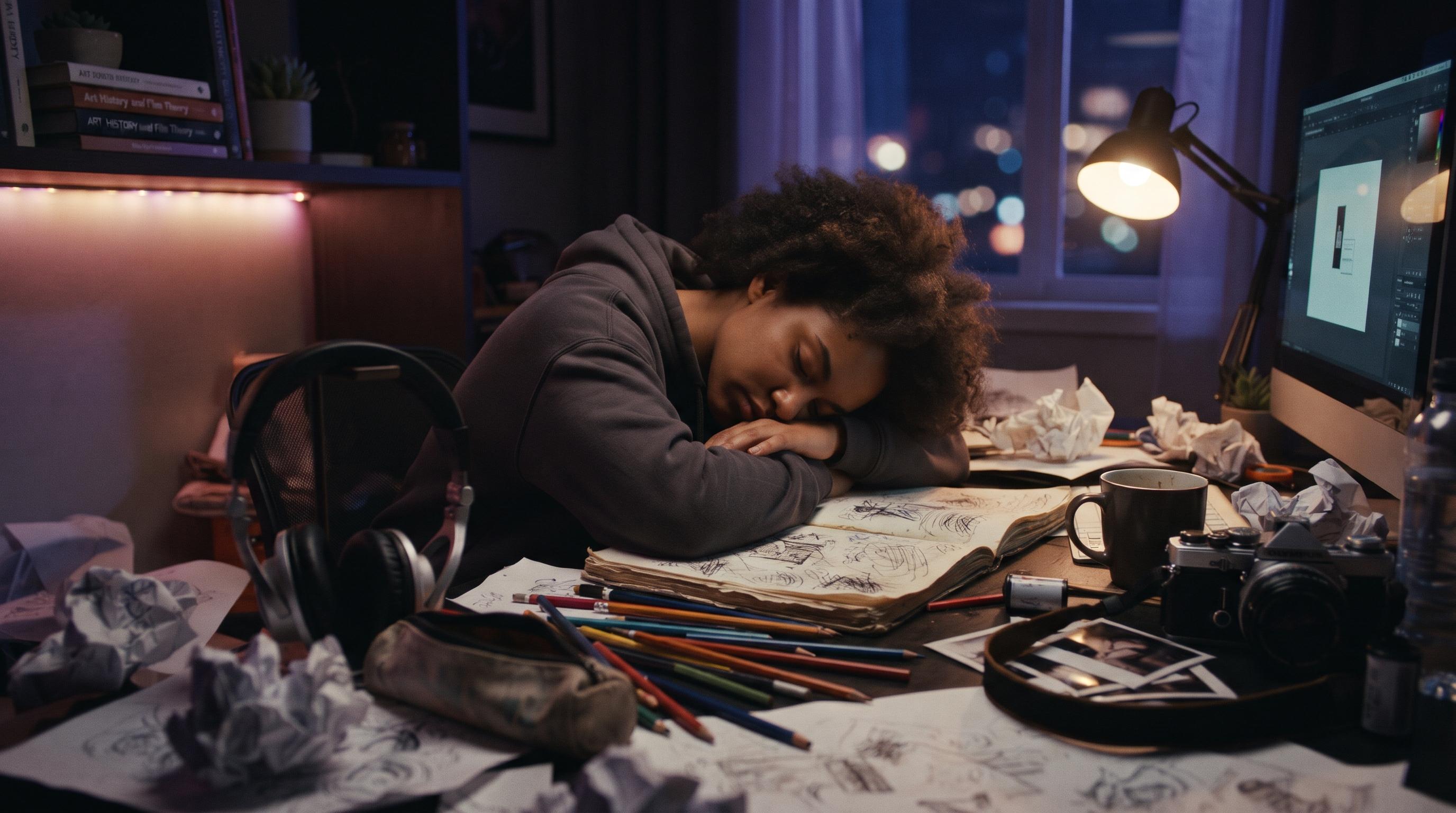
A 2026 research study published in the journal New Media & Society, titled "Creator burnout is real: Risk, responsibility, and un/speakability in the creator economy," examined how burnout develops among social media creators.
The researchers analyzed creator-produced content, news coverage, and interviews with 78 creators.
Their findings explored how platform-dependent creative work can contribute to overwork, mental strain, and unequal expectations surrounding the responsibility to manage those risks.
Read the research – Creator Burnout Is Real (July 7, 2026)
The study reinforces an important point: what appears to be a flexible and desirable career from the outside can involve considerable pressure behind the scenes.
When productivity becomes the measure of success
One of the difficulties of creative entrepreneurship is that progress is not always immediately visible.
A creator may spend months developing a project without generating substantial income. A new business may require considerable investment before attracting consistent customers. An artist may release excellent work that receives very little initial attention.
When success is measured exclusively through numbers, it becomes easy to overlook meaningful progress.
Follower counts, views, likes, bookings, and sales can provide useful information, but they do not represent the entirety of creative development.
Improving a skill, completing a difficult project, establishing a professional relationship, learning a new production technique, or developing a clearer creative identity are also forms of progress.
Not every valuable creative decision will produce an immediate return.
Separating the creative process from the business process
One practical way to reduce unnecessary pressure is to create some separation between the work of creating and the work of managing a creative business.
Consider establishing designated time for: 1. Creative development: Writing, designing, composing, experimenting, and developing new ideas without the immediate expectation of producing something marketable. 2. Business management: Handling invoices, scheduling, marketing, communications, and administrative responsibilities. 3. Professional development: Learning new skills, researching opportunities, and building relationships. 4. Rest and reflection: Taking time away from constant production and evaluating whether current priorities still align with long-term goals.
This structure does not eliminate the responsibilities of creative entrepreneurship. It simply creates more intentional boundaries around them.
The importance of creative community
Creative work can become isolating, particularly when individuals are responsible for managing every aspect of their careers.
Having access to other creatives provides opportunities to share experiences, exchange feedback, develop collaborations, and gain perspective from people navigating similar challenges.
Sometimes, the most valuable thing a creative environment can offer is not another piece of equipment or another networking opportunity. It is a place where people can think, experiment, learn, and reconnect with why they started creating in the first place.
That sense of community can help creators recognize that they do not have to navigate every stage of their development alone.
Building a career that allows you to keep creating
A sustainable creative career should leave room for the person behind the work.
It should allow for experimentation, professional growth, financial development, and the occasional opportunity to step back and reconsider the direction of a project.
Being committed to your craft does not mean you must be constantly available, constantly producing, or constantly proving your value.
The goal is not simply to create more.
It is to create meaningful work while developing the resources, relationships, and practices that allow you to continue doing it.
At DreamLoud Creative Group, we believe that supporting creativity means supporting the people who bring creative ideas to life.
Because a creative career should be something you can grow into, not something that eventually takes away the very thing that made you passionate about it.
Sources and Further Reading: - SAGE Journals – Creator Burnout Is Real (2026) - Ditto Music – Independent Music Report 2026 - Adobe – 2026 Creators' Toolkit Report